
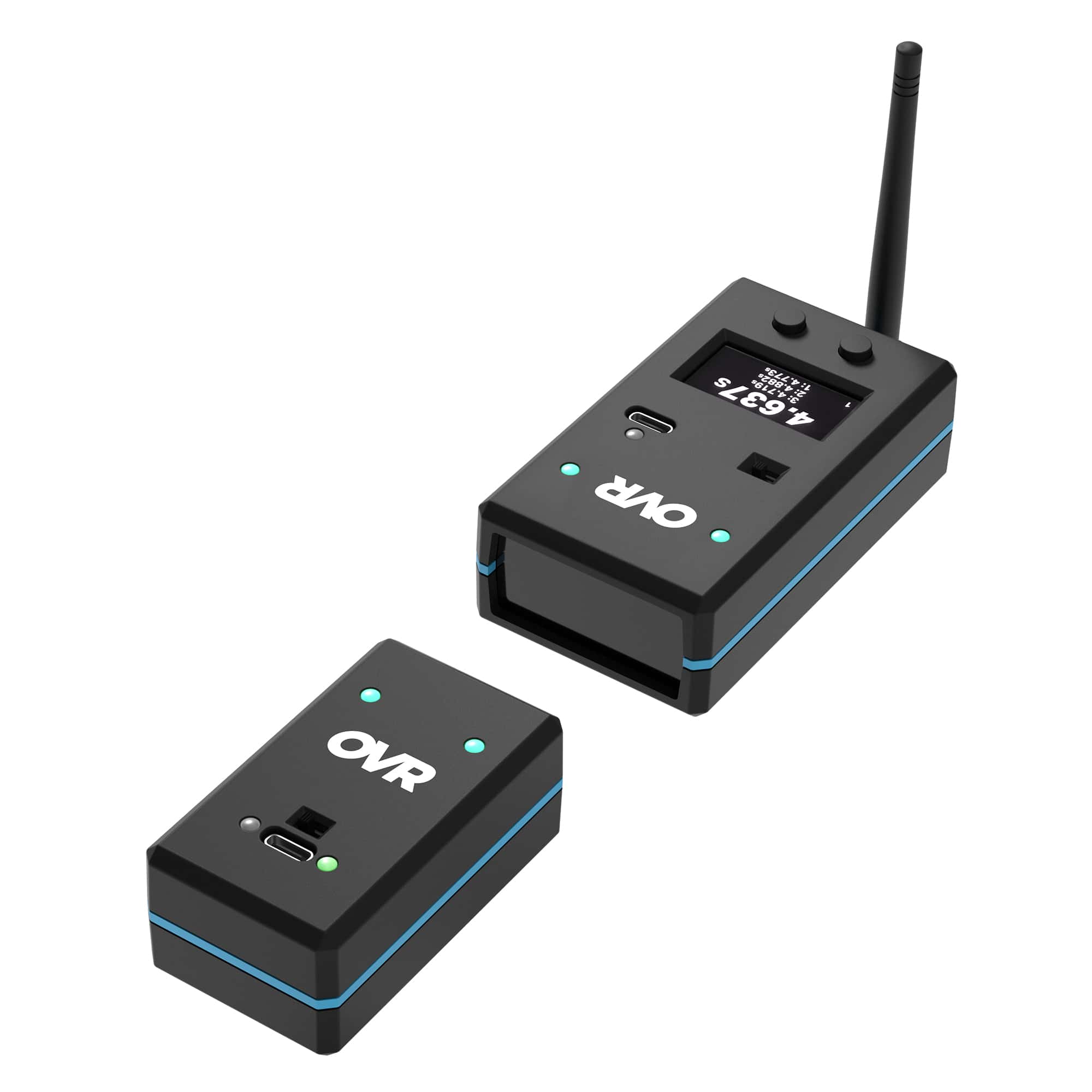
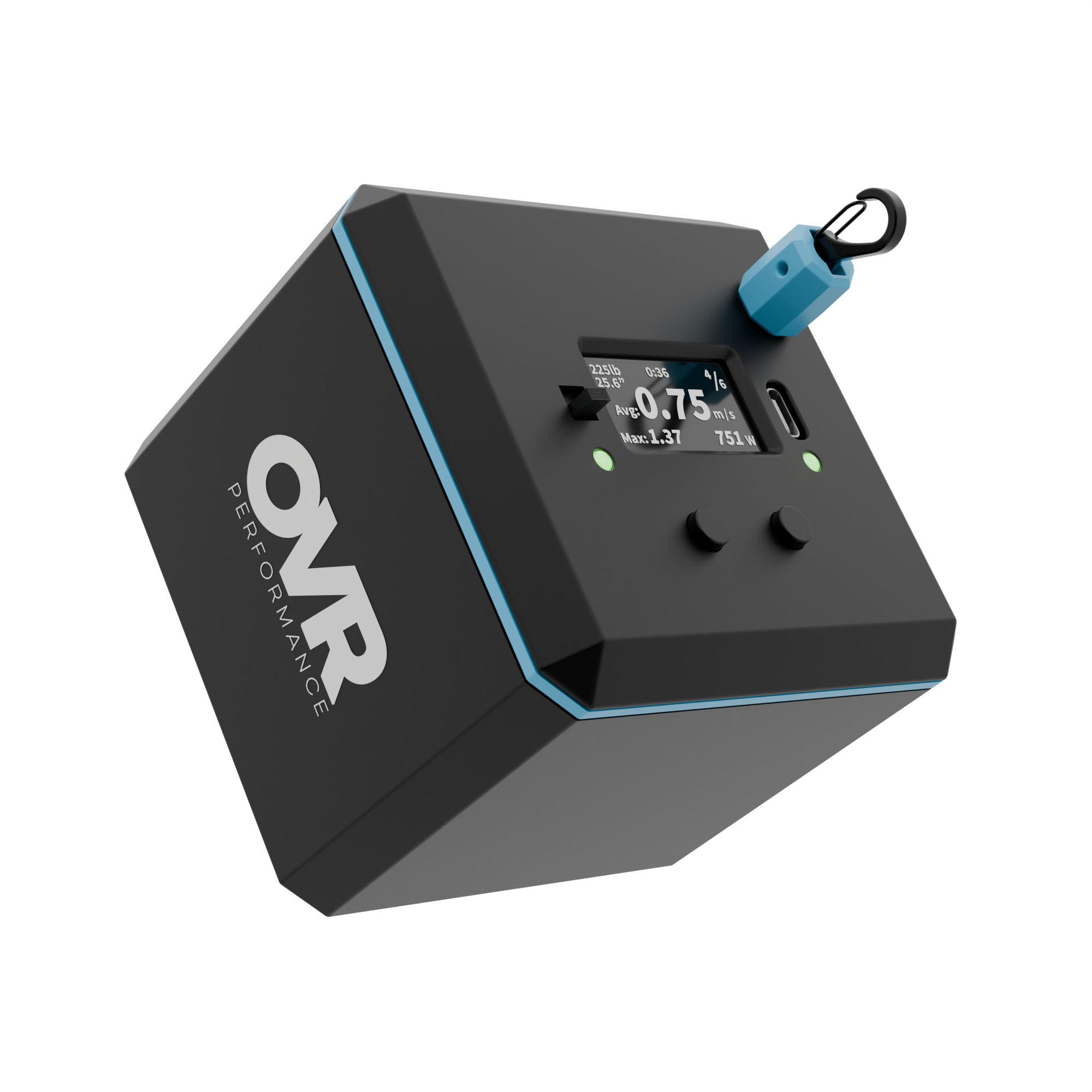
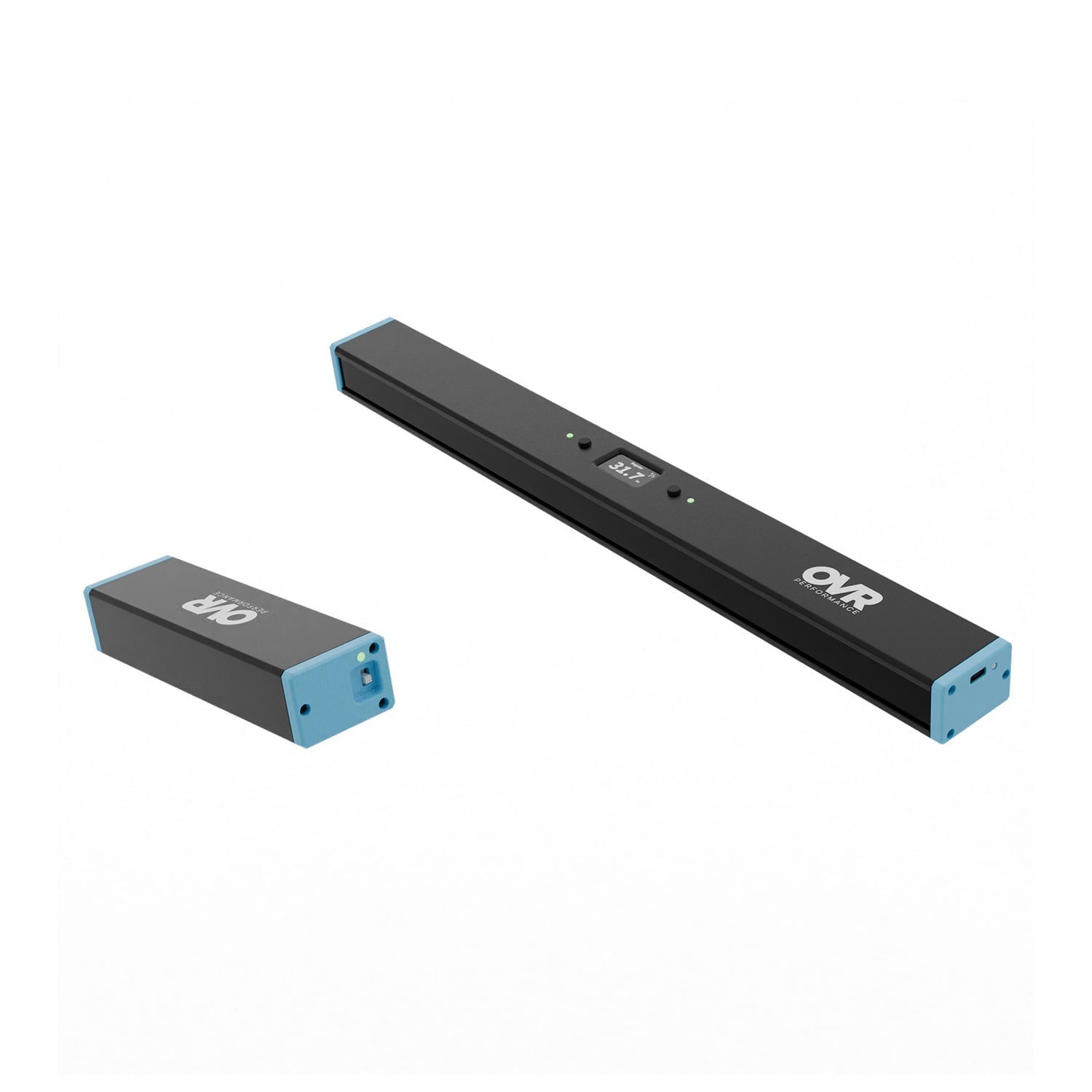


The Reactive Strength Index is a simple ratio that, when used consistently, can be a powerful tool in performance evaluation. It takes two things, jump height and ground contact time, and turns them into a single measure of how efficiently an athlete produces explosive movement. A quality jump testing device captures all of this in the same session, without any complicated setup. Just a clearer picture of performance with insights that go deeper than a single number on a whiteboard.
On the surface, two athletes with identical jump heights can look the same, but a coach's eye knows better. One rebounds in a fraction of a second, the other takes twice as long to get there. Same height, completely different mechanics. RSI gives that observation a number to work with. That contrast shows up in sprinting, cutting, landing, and every reactive moment a sport demands. Learning to read it gives coaches and athletes a layer of insight that height alone tends to miss.
What RSI Is
RSI is a simple ratio.
RSI = Jump Height ÷ Ground Contact Time
Ground contact time is how long the feet are on the ground between landing and takeoff. For most athletes that's under a quarter of a second [2]. That spring-like quality of loading and releasing quickly is what RSI measures, and it turns out to be one of the more meaningful predictors of how an athlete actually moves in sport [1].
Understanding Your Testing Method
Not all RSI scores are created equal. The origin of the number shifts its interpretation. Different methods yield different baselines.
Single fixed-height drop jump is the most practical method for coaches testing groups and works seamlessly with a dedicated jump testing device. The athlete steps off a box, typically 20 to 40 cm, and immediately rebounds as high as possible. Ground contact time and jump height are captured and RSI is calculated from those two values. The table in this blog is based on this method.
The incremental drop jump is a variation where athletes jump from progressively higher boxes to find their optimal drop height. It's the original and most cited method in the research [2], and gives a more complete picture of reactive strength. However, it's better suited for baseline testing at the start of a training block rather than regular monitoring.
RSI-modified (RSI-mod) is what most force plate software reports during a countermovement jump. Instead of ground contact time, it uses time to takeoff. That includes the entire loading and unloading phase of the jump, which is a longer window. Because of that, RSI-mod scores run considerably lower than drop jump RSI for the same athlete. RSI-mod has grown in high-performance settings because it's less demanding, easier to repeat frequently, and well supported as a fatigue and readiness tool [3, 4], though the two methods aren't directly interchangeable and shouldn't be converted between [5].
Multi-jump protocols like the 10/5 repeated jump test and the 4-jump RSI test average results across several reps to produce a more stable and reliable RSI reading than a single effort alone [6]. Both use standing jumps without a box drop, so scores will naturally run slightly lower than the drop jump ranges in the table. The OVR Jump captures the rep-by-rep data you need for either, though the averaging would need to be done manually from the readout.
Whatever method you use, stick with it and test under the same conditions each time.
What the Numbers Mean
The numbers below are derived from drop jump testing, where box height has a meaningful effect on an athlete's score. Two athletes tested at different heights are not directly comparable, and it's worth noting before drawing any conclusions.
| Population | Average | Good | Advanced | Elite |
|---|---|---|---|---|
| Middle school athletes (11-14 yrs) | 0.7–1.0 | 1.0–1.4 | 1.4–1.8 | 1.8+ |
| High school athletes (14-18 yrs) | 1.2–1.6 | 1.6–2.0 | 2.0–2.6 | 2.6+ |
| College athletes (18-23 yrs) | 1.8–2.2 | 2.2–2.8 | 2.8–3.4 | 3.4+ |
| Professional athletes (22+ yrs) | 2.4–3.0 | 3.0–3.6 | 3.6–4.0 | 4.0+ |
These ranges combine practitioner experience with widely cited thresholds. They are not peer-reviewed population norms, and published data broken down by age and competition level for drop jump RSI remains limited. Use them as a starting point, not a definitive standard. The field broadly agrees: below 1.0 suggests an athlete who needs foundational work before progressing plyometric training, and scores above 4.0 are the territory of elite sprinters and jumpers [2, 7].
Box height is one of the most important variables in RSI testing, and it's one that often goes unaddressed. Every athlete has an optimal box height where their RSI peaks, typically somewhere between 40 and 60 cm. Go too low and you understate what the athlete can produce. Go too high and ground contact time starts to climb and the score drops off.
That said, finding the optimal height is only half the equation. For monitoring to mean anything over time, the testing height has to stay the same. Pick a height, document it, and use it every time. The data backs this up. When testing conditions stay the same, drop jump RSI is reliable enough to trust as a monitoring tool [15].
RSI also shifts with footwear, fatigue, and protocol. A score that looks low might reflect a tough week of training. A score that looks high might just mean it was a good day. The most meaningful comparison is always an athlete measured against their own baseline.
For younger athletes, maturation plays a big role in where scores land [8]. A lower RSI in a 12 year old is a starting point, not a concern. It's also worth knowing that scores in younger athletes tend to bounce around more from test to test than they do in older athletes, so averaging a few reps gives you a more reliable number to work with [14].
Reading the Patterns
Once you have a baseline, four patterns tend to emerge. Each one tells you something different about where an athlete is and what they may need.
High RSI. Height is solid and ground contact time is short. This athlete is reactive, not just powerful. That shows up in first-step quickness, cutting, and the ability to absorb and redirect force. Research across multiple populations has found strong associations between RSI and both sprint speed and change-of-direction performance [1, 7]. For coaches, RSI tends to offer a more complete picture of quickness than height alone.
Good height, lower RSI. The strength is there, but the athlete is spending more time on the ground than their strength should allow. This is common in athletes coming from a strength-heavy background or early in their plyometric development. The foundation is solid. Progressive reactive work like drop jumps, hurdle hops, and bounding tends to bridge the gap [9, 10].
High RSI, modest height. Efficient mechanics, not enough force production yet. The ceiling is limited for now, but building the strength base tends to unlock what comes next.
Height holds, RSI drops. The pattern worth watching most closely. When height stays flat but RSI quietly falls, ground contact time is creeping up. The body is compensating, taking longer to produce the same result. Research points to this as an early signal of accumulated fatigue, showing up in how an athlete moves before it shows up in output [11]. It tends to surface before the athlete feels it. A good prompt to review training load and recovery before anything else changes.
Beyond Performance: What RSI Tells Us About Injury Risk
RSI isn't only a performance tool. How an athlete absorbs and redirects force has real implications for injury risk and return to sport, and RSI captures that too.
Limb symmetry is one place this shows up clearly. When one leg produces a meaningfully different RSI than the other during single-leg testing, it can signal compensations that standard strength tests tend to miss. A 2025 study found this pattern in post-ACL athletes who had already cleared standard benchmarks [12]. An athlete can test well on traditional measures and still have a reactive gap between limbs that hasn't fully closed.
A practical threshold commonly used in return-to-sport testing: if one leg scores more than 10% lower than the other on single-leg RSI testing, it's worth digging deeper, even if everything else looks clean [16].
Achilles tendinopathy is another area worth noting. Research has found that athletes with the condition consistently show lower reactive strength compared to healthy controls [13], suggesting RSI may be worth tracking well before symptoms become a bigger problem. It's quick to collect and tends to surface these patterns earlier than most other measures.
What Actually Improves It
The answer is more specific than just training harder.
Plyometric jump training has been shown to improve RSI meaningfully in both adult and youth athletes [9]. Pure resistance training tends to have limited effects on RSI in both youth and adult athletes [10].
Strength and reactive work serve different roles. Strength builds the foundation, how much force an athlete is capable of producing. Plyometric training teaches athletes to express that force quickly, which is exactly what RSI measures. The reason is straightforward: landing stores energy, takeoff releases it, and plyometric training makes that exchange faster and more efficient. Lifting heavy doesn't train that quality directly. It builds the force capacity that makes it possible.
That's why the research consistently points to combined training as the most effective approach [10]. Strength work raises the ceiling. Plyometrics teach the body to use it. Most coaches are already doing both, and that's the right instinct. The sequencing and the intent behind each type of work is what makes the difference.
Start Here
RSI rewards consistency more than anything else. A single score tells you something. A series of scores over time tells you a story, and that story is where the real coaching decisions live.
If you're new to tracking it, the simplest starting point is to pick one protocol and test your athletes at regular intervals under the same conditions. The method matters less than the consistency. Once you have a baseline, the patterns above start to reveal themselves naturally.
A big jump is a good sign. A high RSI at that height is a better one. Two athletes can reach the same height and tell completely different stories underneath it, and now you have a number that brings that difference to the surface.
For coaches who want to train with more intention and develop athletes more fully, RSI is a number worth adding to the toolkit. It won't replace what you already see on the floor, but it will give those observations something to anchor to. The coach's eye and the data are better together, and RSI is one of the cleaner bridges between the two.
References
-
Jarvis P, Turner A, Read P, Bishop C. Reactive strength index and its associations with measures of physical and sports performance: a systematic review with meta-analysis. Sports Medicine. 2022;52(2):301-330.
-
Flanagan EP. The reactive strength index revisited: a strategy for evaluating and developing explosive power. Strength and Conditioning Journal. 2021;43(6):662-674.
-
Suchomel TJ, Bailey CA, Sole CJ, Grazer JL, Beckham GK. Using reactive strength index-modified as an explosive performance measurement tool in Division I athletes. Journal of Strength and Conditioning Research. 2015;29(4):899-904.
-
Bishop C, Jarvis P, Turner A, Balsalobre-Fernandez C. Validity and reliability of strategy metrics to assess countermovement jump performance using the My Jump Lab smartphone application. Journal of Human Kinetics. 2022;83:185-195.
-
Louder T, Thompson BJ, Bressel E. Association and agreement between reactive strength index and reactive strength index-modified scores. Sports. 2021;9(7):97.
-
Stratford C, Dos'Santos T, McMahon JJ. Comparing drop jumps with 10/5 repeated jumps to measure reactive strength index. International Journal of Strength and Conditioning. 2021;1(1):1-13.
-
Jarvis P, Turner A, Bishop C. Reactive strength index as a key performance indicator in different athlete populations: a systematic review. Science and Sports. 2024;39(2):129-143.
-
Gencer Y, Arslan E, Acar MF. Comparison of drop jump and sprint parameters in youth soccer players across maturation groups. Turkish Journal of Sports Medicine. 2020;55(2):148-155.
-
Ramirez-Campillo R, Thapa RK, Afonso J, et al. Effects of plyometric jump training on the reactive strength index in healthy individuals across the lifespan: a systematic review with meta-analysis. Sports Medicine. 2023;53(5):1029-1053.
-
Rebelo A, Pereira JR, Martinho DV, et al. How to improve the reactive strength index among male athletes? A systematic review with meta-analysis. Healthcare. 2022;10(4):593.
-
Philipp NM, Nijem RM, Cabarkapa D, Hollwedel CM, Fry AC. Investigating the stretch-shortening cycle fatigue response to a high-intensity stressful phase of training in collegiate men's basketball. Frontiers in Sports and Active Living. 2024;6:1377528.
-
Hirohata K, Aizawa J, Ohmi T, et al. Association between reactive strength index during single-limb vertical continuous jumps and isokinetic knee extensor strength following anterior cruciate ligament reconstruction. JOSPT Open. 2025;3(2):154-161.
-
McAuliffe S, McCreesh K, Culloty F, Purtill H, O'Sullivan K. Altered strength profile in Achilles tendinopathy: a systematic review and meta-analysis. Journal of Athletic Training. 2019;54(8):889-900.
-
Doyle TLA, Lloyd RS, Oliver JL, et al. Age-group differences in reactive strength and measures of intra-session reliability in female soccer players. International Journal of Sports Physiology and Performance. 2021;16(11):1639-1646.
-
McMahon JJ, Murphy S, Rej SJE, et al. Interday reliability of the reactive strength index and optimal drop height. Journal of Strength and Conditioning Research. 2017;31(4):1036-1041.
-
Read PJ, Oliver JL, De Ste Croix MBA, Myer GD, Lloyd RS. Neuromuscular risk factors for knee and ankle ligament injuries in male youth soccer players. Sports Medicine. 2016;46(8):1059-1066.


Leave a comment
This site is protected by hCaptcha and the hCaptcha Privacy Policy and Terms of Service apply.