


Most coaches have had the experience of watching an athlete go through the motions on a set, a jump, or a sprint without being able to prove it. The effort looks right. The reps get done. But something is missing, and without a number attached to the output, there is no way to know for certain. Performance tracking devices change that by making effort measurable the moment it happens.
The Intent Gap Nobody Measures
The intent gap is rarely visible from the outside. In the weight room, two athletes can work through the same squat set with completely different levels of intent and look nearly identical doing it. That difference is meaningful. Moving a bar as fast as possible activates more muscle, produces more force, and leads to better results over time than moving the same bar slowly [1, 2]. In jump training, genuine maximal effort and comfortable effort can be difficult to distinguish without a number to measure against. The same is true on the track, where the difference between a near-limit sprint and a controlled effort rarely shows up clearly until it is timed.
Most athletes don't produce maximal effort on training reps that aren't near their max [3]. Some were never told they were supposed to. Others understand the idea but lose focus without anything concrete to react to. That is the gap that measuring bar speed is built to close, and the same logic applies to every metric a coach might track.
A 2023 meta-analysis found that real-time feedback improved bar speed by roughly 8.4% on average across all studied groups [1]. Those athletes were already told to give full effort before the study began, and the feedback pushed them further still. Seeing the number changes how hard people actually try.
What Happens When You Show an Athlete a Number
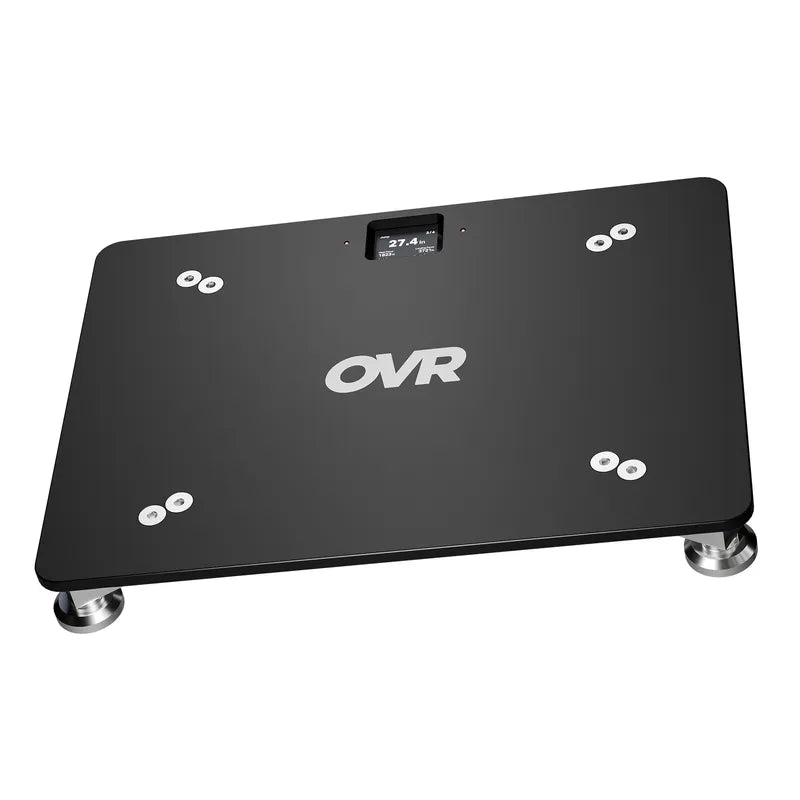
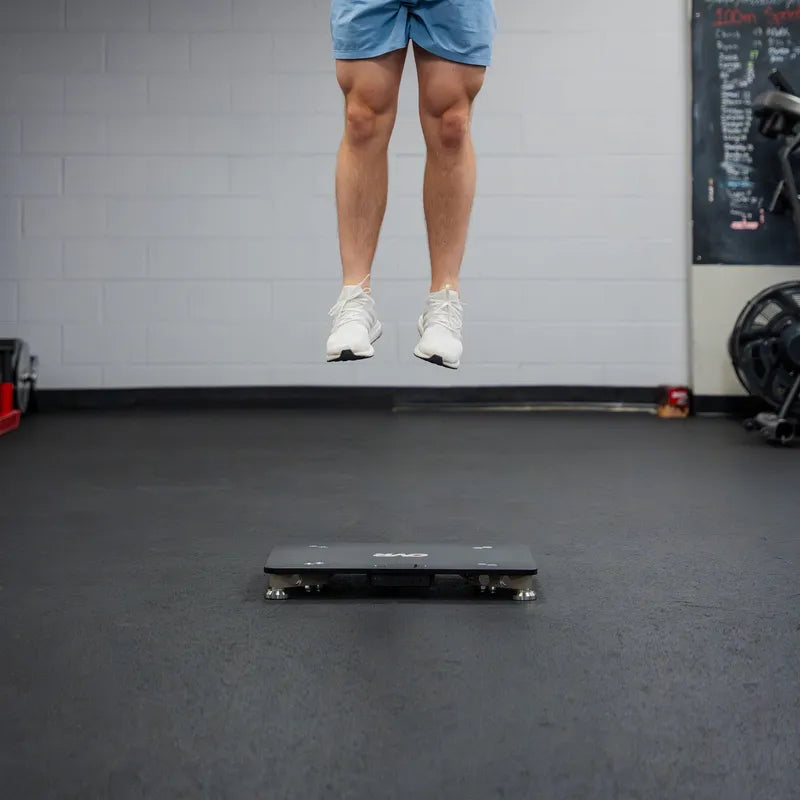
Understanding why a number works helps coaches use it more deliberately. Research in sports psychology consistently shows that people are most motivated when they have a clear, objective measure of how they're doing [4]. A number satisfies that need immediately. Knowing you jumped 26 inches gives a reference point and something to improve on. A number anchors the next attempt with context that a coaching cue rarely can.
This holds across every metric. Jump height, sprint time, and bar speed all follow the same pattern. In a controlled study with highly trained female athletes, showing athletes their exact split times during sprint efforts produced faster times than coaching feedback alone, and athletes also rated their effort and enjoyment higher [5]. Athletes with a visible target consistently produce more than athletes without one.
The Competition Multiplier
When athletes can only see their own numbers, the dynamic is valuable but contained. They chase personal records, monitor their own progress, and self-regulate based on what they see. When the whole group can see each other's numbers, the dynamic shifts from individual effort to something closer to culture. Athletes who were content with their performance become less content the moment a teammate posts a better one. The competitive instinct activates without any prompting from the coach.
Research on group competition supports this, finding that team competition drives harder effort and higher enjoyment than individual training alone [6]. Tools like the OVR Score system formalize that instinct by giving athletes a single rating built from their actual testing data. Visible data also tends to extend accountability beyond formal work sets, showing up in warm-ups and the general standard of effort across a session [3].
How to Use It Starting Today
The only requirement is a number, visible to the athlete immediately after each effort. Attach a velocity tracker to the bar, post jump results where the group can see them, make sprint times visible after every run. The specifics change by setting, but the starting point is the same. Consistent sprint, bar speed, and jump height tracking and testing all serve the same function: they give athletes a number to react to. A leaderboard that drives competition on the track works just as well in the weight room. A beat-your-last-rep goal that sharpens effort on bar speed applies equally to jump height. The tool changes, but the mechanism is the same.
The Principle Is Simple
Effort and competition have always been things coaches work to cultivate, and immediate, objective feedback has made that significantly more predictable. Athletes perform better when they have something concrete to respond to, and the data behind this is consistent across sports, settings, and athlete levels. A number after every rep, every jump, and every sprint gives athletes exactly that.
The culture of a session starts to shift. Athletes self-correct, compete, and push harder without being asked. That response isn't manufactured. It's what happens when athletes can see where they stand, and it begins from the very first session.
References
-
Weakley J, Cowley N, Schoenfeld B, et al. (2023). The effect of feedback on resistance training performance and adaptations: a systematic review and meta-analysis. Sports Medicine, 53(9), 1789-1803.
-
Alizadeh S, Daneshjoo A, Zahiri A, Anvar SH, Goudini R, Hicks JP, et al. (2024). A narrative review of velocity-based training best practice: the importance of contraction intent versus movement speed. Applied Physiology, Nutrition, and Metabolism.
-
Randell AD, Cronin JB, Keogh JWL, Gill ND, Pedersen MC. (2011). Effect of instantaneous performance feedback during 6 weeks of velocity-based resistance training on sport-specific performance tests. Journal of Strength and Conditioning Research, 25(1), 87-93.
-
Deci EL, Ryan RM. (2000). Self-determination theory and the facilitation of intrinsic motivation, social development, and well-being. American Psychologist, 55(1), 68-78.
-
Hagan C, Collins D, Morris R. (2023). The acute effect of various feedback approaches on sprint performance, motivation, and affective mood states in highly trained female athletes. International Journal of Sports Physiology and Performance.
-
Ring C, Kavussanu M, Cooke A. (2022). Effects of cooperation and competition on performance, emotion, and effort: goal and means interdependence. Journal of Sport and Exercise Psychology, 44(2), 86-93.


