

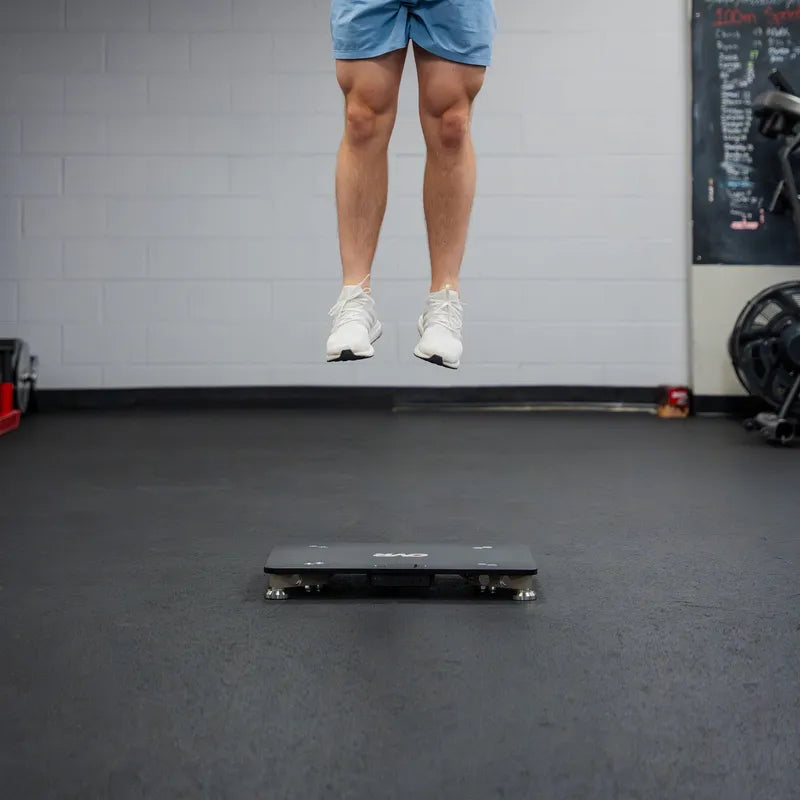


The preseason is where the off-season gets tested. Everything an athlete built, the strength, the conditioning base, the movement quality, either holds up under real demand or it reveals where the gaps are. Using performance tracking devices during this phase is how you know which one it is.
The preseason has one job: turn physical preparation into performance. Getting that right starts with understanding what this phase is actually for.
The Preseason Is Not Off-Season, Part Two
Good off-season programming principles build the physical capacity the preseason needs to work with: general preparedness, strength base, movement quality, connective tissue resilience. That foundation takes time to develop and has to come first.
The preseason's purpose is to sharpen what was built. This phase is characterized by more focused training that reflects the specific physical demands of the sport [1]. Volume comes down. The intensity and intent of individual reps goes up. The quality of each session matters more than the quantity.
Coaches who enter the preseason still trying to build, adding more strength, more volume, more general fitness, tend to produce athletes who arrive at week one tired rather than peaked. The preseason picks up where that foundation ends. Volume comes down, intent goes up, and the job shifts from building capacity to expressing it.
What the Preseason Is Actually For
Transfer is the first. Lower-body strength has been shown to correlate with sprint performance, vertical jump height, and change of direction ability, but those qualities still need to be trained specifically to transfer to sport [2, 3]. The strength has to be built first. Then the movements that use it have to be trained. Optimal transfer requires deliberate, targeted training of the physical qualities that underpin sport performance [4, 5].
Peaking is the second. The goal is to bring athletes to a performance high point timed to the start of competition. This phase is characterized by reduced volume and higher specificity, allowing accumulated fitness to express as performance rather than sit underneath fatigue [6]. Athletes should arrive at week one moving faster and producing more force per rep than they were earlier in the training year.
Peaking is not a one-time event. In-season training, done well, creates the conditions for subsequent peaks. Research on block periodization and tapering suggests that well-timed reductions in volume within a competitive schedule can produce meaningful performance improvements even mid-season [6, 7]. The preseason peak is the first. With the right in-season structure, it does not have to be the last.
Protection is the third. Preseason is historically the highest-risk period for soft tissue problems, particularly in team sports. New physical demands stack quickly: sport-specific running, contact, technical work, all arriving at once on top of an already loaded training schedule. Managing how quickly total load increases week to week is one of the most reliable structural levers a coach has. Rapid spikes in weekly training demand relative to what an athlete is accustomed to handling are associated with elevated injury risk, and the preseason is where those spikes tend to happen [8]. Effective preseason programming holds all three in tension simultaneously.
Managing Volume and Intensity
The most consequential programming decision in the preseason is how to manage the relationship between volume and intensity as competition approaches.
The general principle is well established: volume should decrease as the focus and intensity of individual reps increase. This is the fundamental shape of competition preparation, a taper that lets training express as performance rather than fatigue [1]. What it looks like in practice depends on the sport, the length of the preseason, and how much total work the athlete completed in the off-season.
Two common errors show up here. Volume drops too fast, stripping the athlete of conditioning before competition begins. Or it drops too slowly, leaving athletes too fatigued to produce the high-velocity outputs the preseason demands. Neither produces a peaked athlete.
This is where objective monitoring earns its value. Bar speed declining week over week at a given load, for example, can signal that volume is too high and recovery is falling behind. Stagnant jump height heading into the final two weeks can indicate the taper needs adjustment. Catching these trends early means there is still time to act on them.
Training to Express Strength at Speed
Throughout most of the off-season the emphasis is on building the strength base: absolute strength, work capacity, movement quality. In the preseason, the emphasis shifts toward expressing that strength as fast, explosive movement.
The qualities built in the off-season become the foundation under higher-velocity, more demand-focused work. No quality disappears entirely, but the emphasis rotates. Heavy work stays in the program, just no longer as the primary stimulus.
The ability to produce high force outputs at speed is one of the foundational characteristics underlying successful performance across a wide range of sports, and also one of the qualities most sensitive to accumulated fatigue [9]. High-intensity, high-velocity work requires athletes who have recovered enough to actually produce it. The volume reduction that defines the preseason is what makes that possible.
In velocity-based terms, where the off-season tends to emphasize absolute and accelerative strength, work below 0.75 m/s, the preseason shifts the emphasis toward strength-speed and speed-strength zones [10]. Loads that move fast, explosive intent, and low velocity loss thresholds per set. The goal is producing near-maximal output on every rep and recovering fully before the next one.
For jumps and sprints, the same logic applies: full-effort reps with complete recovery between them. The speed training principles that govern the off-season apply here too, with even less tolerance for junk volume.
Sport Specificity Has Limits
One of the more persistent errors in preseason programming is the belief that sport-specific activity should replace strength work as competition approaches. The logic sounds reasonable: the athlete needs to be ready for the sport, so the training should increasingly look like the sport. But this mixes up two things that serve different purposes.
Technical and tactical preparation belongs in practice. Physical preparation belongs in the weight room. Attempting to simulate sport movements in the gym rarely produces the physical adaptations that actually support sport performance [11]. The weight room builds the qualities the sport demands; practice is where athletes learn to use them under competition conditions.
What changes in the preseason is not that the weight room should look more like the sport. It is that the physical qualities being targeted should more closely match what the sport actually requires. A lineman's preseason work should emphasize different things than a sprinter's. The specificity is in the quality being trained.
Sport practice also has to factor into the workload accounting. Athletes who are running sprints, competing in drills, and taking contact in practice are accumulating physical stress. That has to be reflected in their lifting program. Treating practice and weight room training as independent categories is a reliable way to produce overreaching in the preseason.
Tapering: When and How Much
The deliberate reduction in training load as competition approaches has substantial research support. The details matter considerably.
A two-week taper during which volume is reduced by roughly 40 to 60 percent tends to produce the strongest performance results [12]. Volume is the primary lever. Intensity should be maintained or reduced only slightly. The high-velocity work should be among the last things cut.
Research specific to team sport athletes found that tapering produced meaningful improvements in the ability to produce force quickly, repeat sprints, change direction, and sustain high-intensity output [13]. The qualities that matter most in team sport competition respond well to a well-timed taper.
The taper should feel physically easier without feeling qualitatively different. Lighter volume. Maintained speed. Athletes who arrive at game one sharp and recovered tend to respond better to in-season training demands than those who carry preseason fatigue into the first week of competition.
Readiness Monitoring in the Preseason
The preseason is one of the most important times of year to track how athletes are actually responding to training. It is also when monitoring most often gets skipped in favor of pushing through.
The stakes are higher here than at any other point in the year. An athlete carrying excessive fatigue in January still has room for a recovery week. An athlete carrying that same fatigue into the final three weeks before the season opens does not.
Simple readiness monitoring does not require sophisticated infrastructure. A standardized jump test takes thirty seconds per athlete and produces a number comparable to baseline. Reactive strength index is particularly useful here, capturing both jump height and ground contact time in a single signal.
A bar velocity check at a known submaximal load takes two reps. Sprint times over a short distance confirm whether speed is tracking upward or drifting. All of it takes minutes to collect and directly informs how the session should be adjusted.
An athlete whose jump height is trending down in the final two weeks needs less volume and more recovery. The coaches who use objective data most effectively tend to be those who defined in advance what numbers they are watching and what response each outcome triggers [14]. That clarity is worth building before the preseason begins, when there is still time to act on what the data shows.
The Principles, Brought Together
Every preseason looks different. Every sport, team, and athlete carries a different starting point and a different set of demands. But the principles behind strong preseason programming tend to hold across most of them.
Understand what this phase is for and resist the urge to keep building when the job is to sharpen. Give the transfer of general qualities the deliberate attention it requires. Keep practice in the workload accounting. Rotate the emphasis while keeping all qualities present. Protect the qualities most sensitive to fatigue by maintaining intensity as volume comes down. Monitor objectively so adjustments happen before problems compound.
| Phase | Primary Focus | Key Principle | Starting Point |
|---|---|---|---|
| Early Preseason | Transfer off-season gains | Shift toward sport demand; volume begins coming down | Bias toward strength-speed and speed-strength zones; verify gym outputs are showing up in sprint and jump results |
| Mid Preseason | Express strength at speed | High-intensity, lower-volume; practice counts as workload | Reduce volume, maintain rep intensity; account for field work in recovery planning |
| Late Preseason | Taper and sharpen | Reduce volume; keep high-velocity work present | Target 40 to 60 percent volume reduction over the final two weeks |
| Throughout | Keep all qualities present | No quality disappears; emphasis rotates | Keep heavy work in; increase proportion of fast, explosive effort |
| Throughout | Readiness monitoring | Early data allows adjustments while time remains | Select simple metrics across physical qualities; know what to do when the numbers shift |
| Throughout | Injury risk management | Rapid load increases are the primary structural risk | Control how quickly weekly demand rises; act on fatigue signals early |
The preseason reveals what the off-season actually built. By the time it starts, the physical foundation either exists or it does not. What the preseason can do is make sure that foundation gets expressed as performance when it counts. Keeping it there and continuing to build on it once the season starts is the next challenge.
Sources
- Bompa, T., & Buzzichelli, C. (2019). Periodization: Theory and methodology of training (6th ed.). Human Kinetics.
- Wisløff, U., Castagna, C., Helgerud, J., Jones, R., & Hoff, J. (2004). Strong correlation of maximal squat strength with sprint performance and vertical jump height in elite soccer players. British Journal of Sports Medicine, 38(3), 285-288.
- Swinton, P. A., Lloyd, R., Keogh, J. W. L., Agouris, I., & Stewart, A. D. (2014). Regression models of sprint, vertical jump, and change of direction performance. Journal of Strength and Conditioning Research, 28(7), 1839-1848.
- Verkhoshansky, Y., & Siff, M. (2009). Supertraining (6th ed.). Verkhoshansky SSTM.
- Stone, M. H., Hornsby, W. G., Suarez, D. G., Duca, M., & Pierce, K. C. (2022). Training specificity for athletes: emphasis on strength-power training. Journal of Functional Morphology and Kinesiology, 7(4), 102.
- Issurin, V. (2016). Block periodization: Benefits and limitations. Sports Medicine, 46(3), 329-338.
- Dietz, C., & Peterson, B. (2012). Triphasic training: A systematic approach to elite speed and explosive strength performance. Dietz Sport Enterprise.
- Gabbett, T. J. (2016). The training-injury prevention paradox: should athletes be training smarter and harder? British Journal of Sports Medicine, 50(5), 273-280.
- Haff, G. G., & Nimphius, S. (2012). Training principles for power. Strength and Conditioning Journal, 34(6), 2-12.
- Mann, J. B., Ivey, P. A., & Sayers, S. P. (2015). Velocity-based training in football. Strength and Conditioning Journal, 37(6), 52-57.
- Zatsiorsky, V., & Kraemer, W. (2006). Science and practice of strength training (2nd ed.). Human Kinetics.
- Bosquet, L., Montpetit, J., Arvisais, D., & Mujika, I. (2007). Effects of tapering on performance: a meta-analysis. Medicine and Science in Sports and Exercise, 39(8), 1358-1365.
- Vachon, A., Berryman, N., Mujika, I., Paquet, J. B., Arvisais, D., & Bosquet, L. (2021). Effects of tapering on neuromuscular and metabolic fitness in team sports: a systematic review and meta-analysis. European Journal of Sport Science, 21(3), 300-311.
- Haff, G. G., & Triplett, N. T. (Eds.). (2016). Essentials of strength training and conditioning (4th ed.). Human Kinetics.


