


The question comes up constantly: how many devices do I actually need for my group? The answer is different for each tool, and that is the key thing to understand before buying anything. Whether you are looking at a velocity tracker, a jump testing device, or timing gates, the logic that drives the decision is different for each one. For those using our athletic training devices, the principles are straightforward once you know what to follow. For Velocity, the number of racks you have is what determines the answer. For Jump and Sprint, it is the number of athletes being trained at one time. Get those principles right and the rest of the decision tends to fall into place.
One rule applies across all three: no device should slow down a session. The ideal setup is one where the rotation and rest periods align naturally with recovery needs, so quality stays high from rep to rep.[1–3,7,8] By the time an athlete has waited for everyone else in their group to go, they have had the rest they need and are ready to go again.[1–3,7,8] The goal is more data with less friction.
OVR Velocity: Follow Your Rack Count
With velocity, the number of racks you have is the number of devices you need. The device lives on the rack, measures the bar at that station, and stays there for the session. Two racks means two devices. Three racks means three. The equipment layout drives the answer, not the roster size.
A program with 50 athletes and three squat racks needs three devices. Buying more does not add data; it just adds unused hardware.
Athletes per station
Three to four athletes per rack is a practical starting point for any team VBT because it inherently creates rest windows that strength and power research recommends.[1–3] A work set usually takes 30 to 60 seconds, and with strength or power as the goal, research supports rest periods of around 2 to 5 minutes between heavy compound sets to keep quality high.[1–3] Integrate velocity loss thresholds during working sets, and the length of each set and the breaks between them naturally organize around those targets.[1–3] With 3 to 4 athletes sharing a station, each one gets roughly 90 to 240 seconds of rest while the others work, and the rotation lines up nicely with those demands.[1–3]
As the number of athletes per rack increases beyond that range, session structure becomes increasingly important. Clear rotation order, consistent set timing, and deliberate rest management are what keep a larger group running smoothly at a single station.[1–3]
| Racks Available | Devices Needed | Recommended Rotation |
|---|---|---|
| 1 | 1 | 3 to 4 athletes |
| 2 | 2 | 3 to 4 athletes |
| 3 | 3 | 3 to 4 athletes |
| 4+ | 1 per rack | 3 to 4 athletes |
Start with what you have. If a program has two racks, two devices is the answer. Add devices as racks are added, not before.
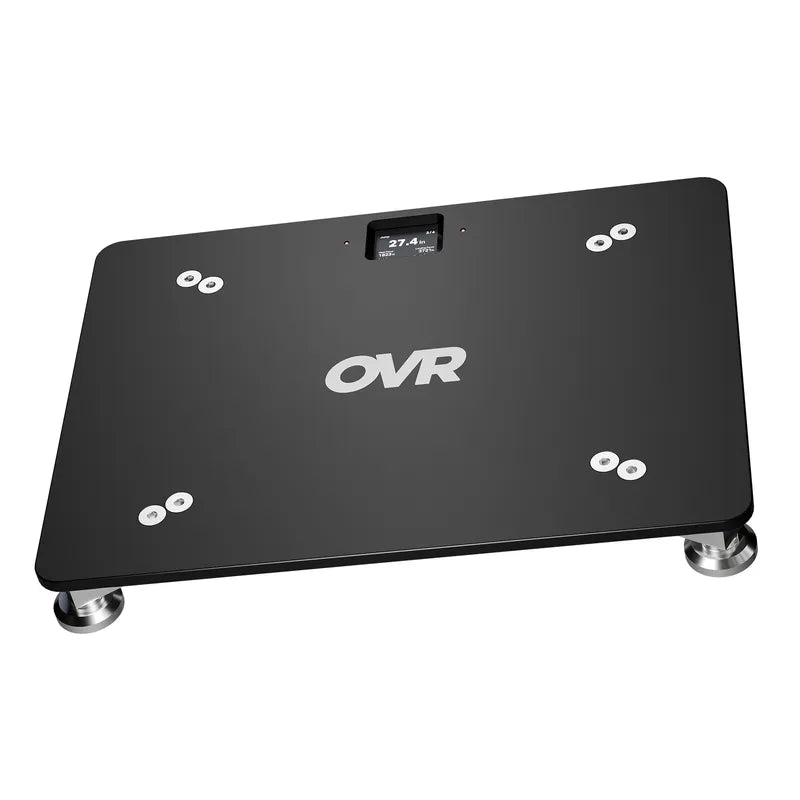
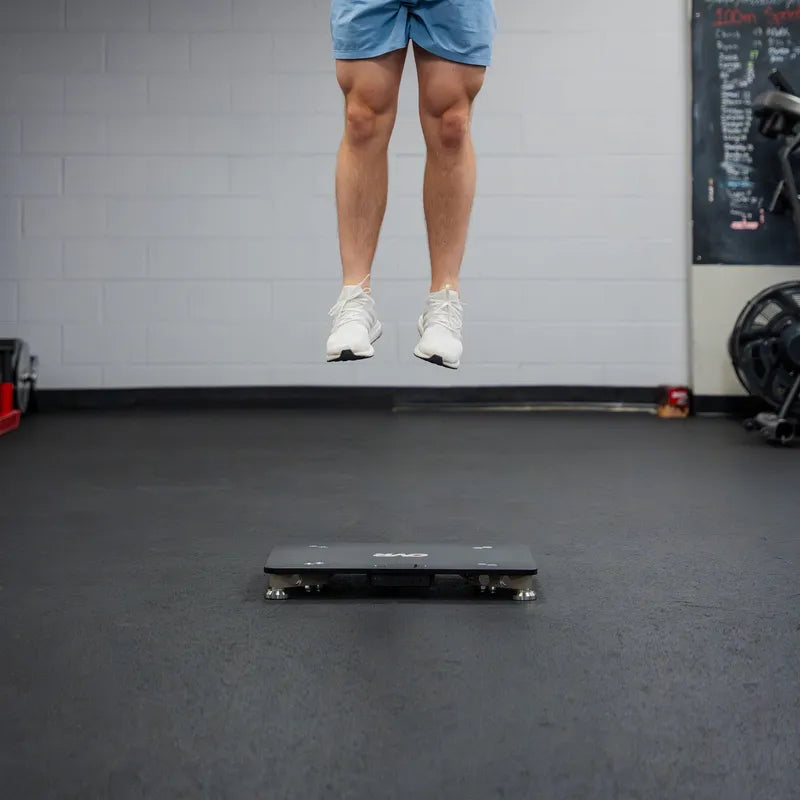
OVR Jump: Scale With Athlete Count
Jump testing is sequential rather than parallel. One athlete steps up, jumps, and the next steps in. The jump itself is almost instant, and rest periods of around 60 seconds between max efforts are commonly used in research protocols, so the rotation can move quickly while still maintaining performance quality.[4–6]
That said, there is a practical point where one device starts to feel stretched. Keeping the group per device to around 10 athletes or less tends to maintain a good rhythm; athletes stay engaged, rest stays in range, and the session keeps moving. With one warm-up and 2 to 3 recorded jumps per athlete, this group size still leaves roughly 60 seconds or more between max efforts, matching protocols for jump testing both in research and in everyday training.[4–6] Beyond that, adding a second device is worth considering. Every program is different. If time is limited, space is tight, or the flow of the session is feeling compromised before that point, it may be worth adding a device sooner rather than later. Trust what you are seeing on the floor.
| Athletes in Session | Recommended Devices |
|---|---|
| Up to 10 | 1 |
| 10 to 20 | 2 |
| 20 to 30 | 3 |
| 30+ | 4+ |
Protocol guidance
Allow one warm-up jump before recording. Two to three recorded attempts per athlete is standard in both research and applied settings, with either the best score or the average used for comparison.[4–6] Whatever you choose, the most important thing is applying it consistently across every athlete and every session. Inconsistent protocols make the data unreliable and comparisons meaningless.[4–6]
If adding drop-jump or RSI testing, plan extra time per athlete. Drop jump protocols move slower than standard jump testing. The goal is often simply to hit a high, crisp jump from a consistent drop height. RSI work adds another layer of intent and is used as a quick test of explosive power. With RSI, you are managing drop height, landing position, jump height, and contact time instead of just chasing a single best jump. Both involve more precision and are more sensitive to fatigue and technique.[4–6]
OVR Sprint: Scale With Lanes
Sprint testing scales by lanes and by how many splits you want to capture. One set of gates covers one lane, and one athlete runs at a time per lane. Adding a second lane roughly doubles throughput. With ten channels available, multiple lanes can run side by side without interference.
Sprint testing, like measuring vertical jump, is more efficient within certain group sizes. Somewhere around 15 athletes or more per lane is where a single lane starts to feel like it is working harder than it needs to. At that point, adding a lane brings rest and flow back in line with sprint training guidelines and makes the session run noticeably smoother for everyone. As always, the situation on the ground matters most. If space, time, or session flow suggest making that move earlier, it is worth trusting that read. And if things are running smoothly with more athletes than expected, there is no reason to change what is working.
Gates per lane
The number of gates needed depends on how many splits you want to measure, not just how many lanes you are running. Each additional split requires one additional gate, so a simple rule is:
Gates per lane = desired splits + 1
| Splits | Gates Per Lane | Example |
|---|---|---|
| 1 (start and finish only) | 2 | 40 yard dash |
| 2 | 3 | 40 yard dash with 10 yard split |
| 3 | 4 | 40 yard dash with 10 and 20 yard splits |
| 4 | 5 | 40 yard dash with 10, 20, and 30 yard splits |
| Desired splits | Splits + 1 | Add one gate per additional split |
Lanes by athlete count
| Athletes in Session | Recommended Lanes | Minimum Gates |
|---|---|---|
| Up to 15 | 1 | 2 |
| 15 to 30 | 2 | 4 |
| 30 to 45 | 3 | 6 |
| 45+ | 4+ | 8+ |
Rest and sprint quality
For shorter acceleration-based sprints, research and coaching guidelines generally support rest periods of about 60 to 90 seconds for conditioned athletes. For maximal effort sprints at longer distances, two to four minutes is a more appropriate starting point to maintain data quality across efforts. Individual fitness levels, daily readiness, and the broader demands of the session all influence how much rest any given athlete actually needs on a given day.[7,8]
A simple rule of thumb when starting out is to give enough rest that sprint times and mechanics stay consistent from rep to rep, usually meaning about 60 to 90 seconds for short accelerations and 2 to 4 minutes for longer sprints. An even simpler version is for every 10 meters or yards run, allow roughly one minute of rest.[7,8] From there, reasonable adjustments in either direction are part of good coaching. Visible fatigue and any drop in rep to rep times will generally tell you more than the clock will. Natural rotation across lanes often provides appropriate rest without any deliberate timing on the coach's part.[7,8]
The Short Version
The device count question is simpler than it might seem once you know which variable to follow for each tool.
Velocity follows your equipment. One device per rack is the starting point. Roster size shapes how you plan around the racks you have, but it does not change how many devices you need. Keeping 3 to 4 athletes per station typically gets you 2 to 5 minutes of rest between heavy sets, both lining up with training recommendations and keeping the energy in the room where it belongs.[1–3]
Jump and Sprint follow your athlete count. For the Jump, around 10 athletes or less per device, and for the Sprint, around 15 or fewer athletes per lane, are practical, research-informed starting points that keep rest intervals and engagement where they need to be.[4–8] If the session is flowing well, stay the course. If time, space, or athlete engagement starts to feel compromised, adding a station sooner rather than later is worth considering.
The best setup is one where the technology disappears into the session. Athletes are competing, moving, and improving, and the data is just there, every rep, every effort, every athlete. Get the device count right and that is exactly what happens. Every program is different, and no set of guidelines accounts for every situation. Use these as a foundation, trust what you know about your athletes and your environment, and build from there.[1–8]
References
-
De Salles, B. F., Simão, R., Miranda, F., da Silva Novaes, J., Lemos, A., & Willardson, J. M. (2009). Rest interval between sets in strength training. Sports Medicine, 39(9), 765–777.
-
Willardson, J. M. (2006). A brief review: Factors affecting the length of the rest interval between sets. Journal of Strength and Conditioning Research, 20(4), 978–984.
-
Senna, G., de Salles, B., Prestes, J., et al. (2009). Effect of rest interval length on the volume completed during upper body resistance exercise. Journal of Sports Science and Medicine, 8(3), 388–392.
-
Anićic, Z., Janicijevic, D., Knezevic, O. M., et al. (2023). Assessment of countermovement jump: What should we report? Life, 13(1), 190.
-
McMahon, J. J., Suchomel, T. J., Lake, J. P., & Comfort, P. (2019). A review of countermovement and squat jump testing methods in the context of load–velocity profiling. Sports, 7(7), 159.
-
The influence of countermovement jump protocol on reactive strength index measures. (2019). Master's thesis, East Tennessee State University.
-
Alexander, J. (2023). Sprint training workouts for distance runners. Athletic Lab.
-
Rogers, T., Gill, N., & Beaven, C. M. (2023). A comparison of three different work-to-rest periods during intermittent sprint training. Journal of Science and Medicine in Sport, 27(12), 97–102.


