

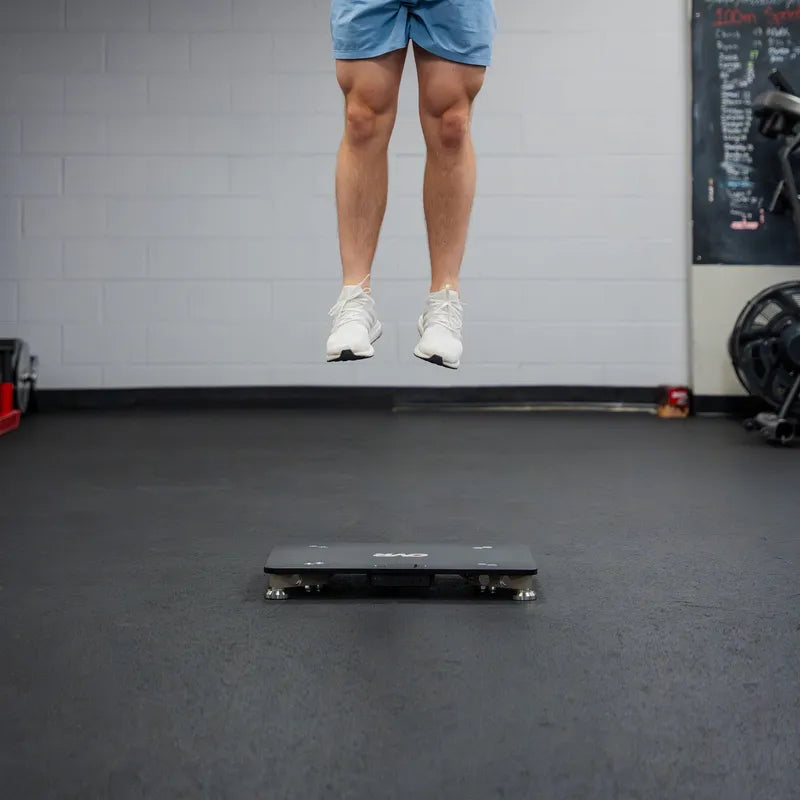


The season is here. Everything built in the off-season and sharpened in the preseason gets tested now in real time, every week, sometimes twice or more a week. The decisions made once competition begins are what determine whether athletes actually perform at the level that preparation was designed to produce. Using performance tracking devices throughout the season is how you know whether the work is holding up or quietly falling apart.
These are the guiding principles behind effective in-season training, applicable across sports, levels, and schedule lengths.
What the In-Season Is Actually For
The in-season requires the same deliberate attention as any other phase of the training year. Speed and power qualities start to decline within one to two weeks of insufficient training, while strength can hold for several weeks longer before meaningful losses show up [1]. The physical base built during the off-season training phase needs consistent, intentional work to stay intact across a long competitive schedule.
The goal is to keep athletes performing at the level the preseason peaked them to. That requires the right training stimulus, objective measures, and the flexibility to adjust as the season demands.
Managing Volume and Intensity
The principle that guides good in-season programming is straightforward: volume comes down while intensity stays up. Reducing volume creates recovery room. Maintaining intensity preserves the training signal that keeps physical qualities sharp.
Research on tapering found that performance outcomes were strongest when volume was cut substantially while intensity was maintained [2]. A broader review of maintenance training confirmed the same: intensity is the key variable for keeping performance level over time, even when frequency and volume drop considerably [3].
In velocity-based terms, in-season work should stay primarily in the accelerative strength and strength-speed zones, roughly 0.50 to 1.00 meters per second, with velocity loss thresholds generally kept between ten and twenty percent on main lifts depending on the exercise and goal [4]. That delivers a strong enough training signal to keep the work from the previous months intact.
Research on in-season training frequency found that one high-quality strength session per week was enough to maintain the strength, sprint, and jump performance built during preseason training [5]. The schedule dictates frequency, but the quality of effort within each session is what produces the result.
Practice Is Part of the Load
In-season programming works best when practice and lifting are treated as parts of the same total weekly load. A two-hour session with full-speed conditioning, contact, and repeated sprints carries real recovery consequences. Accounting for that in the lifting program is what keeps the overall demand manageable.
Research consistently links rapid spikes in weekly training load to elevated injury risk [6]. The in-season schedule creates those spikes regularly. Thinking in total weekly demand rather than isolated sessions allows coaches to scale the lift appropriately. When the practice week is heavy, the lift gets shorter. When a bye week creates room, the lift can reflect that.
Maintaining Physical Qualities Across a Long Season
Every physical quality needs some training to stay where it is. Strength holds for several weeks without meaningful work, while speed and power start declining within one to two weeks [1]. Small, consistent doses across the full season are what keep the physical base intact.
Research on maintenance training found that strength can be maintained with as little as one session per week and one hard set per exercise, provided the effort stays high [3]. A regular dose of heavy lifting keeps the strength base in place. A few explosive reps early in a session keep speed qualities sharp.
The sessions that hold athletes together across a long season tend to be short and purposeful. Heavy work and explosive effort, even in small amounts, protect the qualities that matter most and require the least time to deliver.
Monitoring Readiness Throughout the Season
Every in-season program is a hypothesis. What actually happens depends on how athletes are responding to the cumulative demands of competition, practice, travel, and training. The only way to know is to measure something.
A standardized jump test takes thirty seconds per athlete and produces a number comparable to baseline. Tracking reactive strength index during jump testing adds another layer, capturing both jump height and ground contact time in one measure. A bar velocity check at a known submaximal load takes two reps. If an athlete typically moves a moderate squat at 0.75 meters per second and today it is coming out at 0.62, that is a fatigue signal and the session should be adjusted accordingly [4].
Research shows that objective performance markers allow coaches to make informed adjustments rather than relying on feel alone [7, 8]. Catching these trends early allows for small timely corrections rather than larger problems that compound across several weeks. The in-season demands a shorter feedback loop, and having simple data in place is what makes that possible.
Peaking Within a Long Season
Every game matters, and the training program should be structured to keep athletes ready for all of them. Research on team sport athletes shows consistent improvements in force production, sprint performance, and repeated sprint ability when training volume is reduced meaningfully in the one to two weeks leading into a competition peak [9]. A well-timed reduction clears accumulated fatigue and allows the fitness built throughout the season to fully express.
Applying that principle across the schedule, with deliberate lighter training weeks built around the most demanding competition stretches, tends to keep athletes performing more consistently from week to week than a uniform load approach does.
Managing Injury Risk Across the Schedule
The in-season creates an environment where the body operates under elevated stress for months at a time. Cumulative fatigue, travel, schedule congestion, and the physical demands of competition all stack. Managing that accumulation is one of the most important jobs the program has to do.
Research consistently shows that weeks with a large spike in total training demand, relative to the weeks before them, carry higher injury risk [6]. Keeping week-to-week load increases reasonable is the most reliable structural way to keep athletes healthy across a long season. Bar velocity that runs consistently lower than normal at a given load is one of the earlier signs that fatigue is building [4]. It tends to surface early enough to act on before anything becomes a real problem.
The Principles, Brought Together
Every in-season looks different. The sport, schedule, roster, and available resources all shape what is actually possible. But the principles that guide effective in-season training hold across most contexts.
Give this phase the same deliberate attention as the preparation phases that came before it. Keep intensity present as volume decreases. Account for practice and competition as part of the total training load. Keep all physical qualities present with small, consistent doses. Monitor objectively so adjustments happen early. Manage weekly load carefully as the primary way to keep athletes healthy.
| Focus | Key Principle | Actionable Starting Point |
|---|---|---|
| Volume and intensity | Volume decreases; intensity stays up | Keep main lifts in the accelerative strength and strength-speed zones; keep velocity loss between 10–20% |
| Total workload | Practice and competition count | Think in total weekly stress; adjust lifting when game and practice demands are high |
| Quality retention | All physical qualities need a consistent stimulus | Keep heavy work and explosive effort present throughout the season |
| Readiness monitoring | Objective data drives better decisions | Track jump height, bar velocity, or sprint times regularly; define decision rules before the season begins |
| Competition peaks | Competitive stretches deserve a targeted taper | Build volume reductions around long competitive stretches; maintain intensity while reducing total load |
| Injury prevention | Managing load spikes protects athletes across a long schedule | Monitor week-to-week demand; use velocity drops and jump height trends as early indicators |
The athletes who perform at a high level in the final weeks of a season are the ones whose program kept the right qualities sharp, kept load spikes in check, and used objective data to make good decisions when the margin for error was smallest.
References
-
Mujika, I., & Padilla, S. (2000). Detraining: Loss of training-induced physiological and performance adaptations. Part I. Sports Medicine, 30(2), 79–87.
-
Bosquet, L., Montpetit, J., Arvisais, D., & Mujika, I. (2007). Effects of tapering on performance: A meta-analysis. Medicine and Science in Sports and Exercise, 39(8), 1358–1365.
-
Spiering, B. A., Mujika, I., Sharp, M. A., & Foulis, S. A. (2021). Maintaining physical performance: The minimal dose of exercise needed to preserve endurance and strength over time. Journal of Strength and Conditioning Research, 35(5), 1449–1458.
-
Pareja-Blanco, F., Rodríguez-Rosell, D., Sánchez-Medina, L., Sanchis-Moysi, J., Dorado, C., Mora-Custodio, R., Yáñez-García, J. M., Morales-Alamo, D., Pérez-Suárez, I., Calbet, J. A. L., & González-Badillo, J. J. (2017). Effects of velocity loss during resistance training on athletic performance, strength gains and muscle adaptations. Scandinavian Journal of Medicine and Science in Sports, 27(7), 724–735.
-
Rønnestad, B. R., Nymark, B. S., & Raastad, T. (2011). Effects of in-season strength maintenance training frequency in professional soccer players. Journal of Strength and Conditioning Research, 25(10), 2653–2660.
-
Gabbett, T. J. (2016). The training-injury prevention paradox: Should athletes be training smarter and harder? British Journal of Sports Medicine, 50(5), 273–280.
-
Haff, G. G., & Triplett, N. T. (Eds.). (2016). Essentials of strength training and conditioning (4th ed.). Human Kinetics.
-
Weakley, J., Townshend, A., Morrison, M., Schapiro, J., Cohen, D., & Garcia-Ramos, A. (2025). Reliability, sensitivity, and construct validity of drop jump and barbell velocity assessments to determine neuromuscular status in professional, male basketball players. Research Quarterly for Exercise and Sport.
-
Vachon, A., Berryman, N., Mujika, I., Paquet, J. B., Arvisais, D., & Bosquet, L. (2021). Effects of tapering on neuromuscular and metabolic fitness in team sports: A systematic review and meta-analysis. European Journal of Sport Science, 21(3), 300–311.


